

A dental implant is a tooth‑replacement solution based on a substructure embedded in bone tissue to support and retain the upper dental prosthesis.
It consists of two components: the underlying implant fixture and the upper dental prosthesis.
The implant fixture is made of artificial materials such as titanium alloy or ceramic, shaped to mimic natural tooth roots. It is surgically placed into the upper or lower jawbone to achieve stable osseointegration with bone tissue. Special connecting components are used to attach and support the upper prosthesis.
Dental implants deliver restoration results highly comparable to natural teeth in function, structure and aesthetics, and have become the preferred restoration option for many patients with missing teeth.
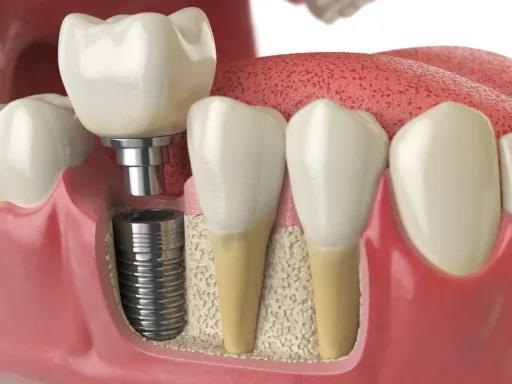
Conventional submerged implant treatment involves two surgical stages.
Stage‑one surgery: After local anaesthesia and disinfection, an incision is made at the edentulous site. The alveolar bone is located with a round bur, the osteotomy site is prepared, and the implant fixture is inserted to achieve osseointegration. The implant fixture and cover screw are seated in the alveolar bone, and soft‑tissue wound is tightly sutured. Osseointegration generally takes 4‑6 months.
Stage‑two surgery: The cover screw is replaced with a healing abutment, which protrudes into the oral cavity. Approximately one month is required for gingival soft‑tissue maturation. Once soft tissues are ready, impressions can be taken for fabricating the final crown.