

I. Tooth Cleaning: Regular Cleaning + Deep Cleaning
1. Regular Cleaning (Scaling)
Scaling is a very common basic routine cleaning, but many people have misconceptions about it.
1) "My teeth gaps got bigger after cleaning"
Healthy gums should look pointed between two teeth. If they are not, it means tartar is trapped between the teeth and gums, causing the gums to swell and deform. After the tartar is removed, the swollen gums gradually subside and the gaps between teeth become visible, which is why many people think their teeth gaps have widened.
Of course, if you never have your teeth cleaned, tartar will cause the gums to recede. If the periodontal environment deteriorates, gum recession becomes more severe, which means alveolar bone resorption and the teeth will appear "longer." More exposed roots can lead to loosening teeth as you age. Gum recession is an irreversible process.
2) "I brush twice a day, so I don't have much tartar"
Brushing twice a day helps clean the teeth to a certain extent. However, since plaque forms a stable attachment on the tooth surface after every meal, daily brushing can only clean about 60% of the tooth surface, which is not enough to thoroughly clean all the teeth.
3) "Cleaning will make my teeth whiter"
Cleaning does not make teeth whiter. It only restores the teeth to their natural color. Its main purpose is to remove plaque, tartar and stains attached to the tooth surface, making the gums healthier and preventing periodontal diseases.
2. Deep Cleaning (Scaling and Root Planing)
Deep cleaning, also called scaling and root planing, is usually recommended for patients with gingivitis, or those who may develop gingivitis in the future due to tartar buildup. The procedure requires local anesthesia and is performed manually by professional dentists. The so-called deep cleaning involves inserting instruments below the gumline to scrape tartar and plaque off the tooth roots.
What is the difference between regular cleaning and scaling and root planing?
The areas where tartar is removed are different. Regular cleaning removes supragingival calculus, i.e. tartar located above the gum margin or in the gingival sulcus. Scaling and root planing, on the other hand, removes tartar inside the periodontal pockets, which is located deeper, so it is technically more difficult and requires higher skill.
II. Daily Care: Electric Toothbrush + Dental Floss
Some people think that brushing their teeth hard every day keeps them clean! NO!! Brushing too hard can damage the enamel on the tooth surface, expose the tiny nerves in the teeth and make them sensitive. An electric toothbrush can cause less damage to the teeth than a traditional toothbrush.
First, an electric toothbrush requires less force, reducing the chance of gum bleeding.
Second, for those who brush incorrectly, an electric toothbrush can help protect the enamel.
In addition, electric toothbrushes clean more effectively than traditional ones. According to statistics, an electric toothbrush is about 30% more effective at cleaning than a manual toothbrush. When using an electric toothbrush, read the instructions carefully and master the correct usage.
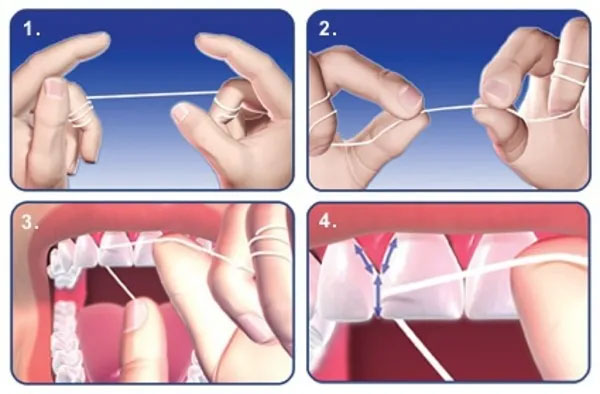
Dental floss is a tool that helps clean the hard surfaces between teeth. It can effectively remove food debris between teeth and plaque on adjacent tooth surfaces, and to a certain extent prevent oral diseases such as cavities, periodontitis and gingivitis. The correct way to use dental floss is not straight up and down, but in a "Y" shape, as shown in the picture.
"Toothache is not a disease, but when it hurts, it can be unbearable." Pay attention to daily care and have regular preventive cleanings and checkups. Do not wait until the pain becomes unbearable to see a dentist. We hope everyone can develop the good habit of regular teeth cleaning and maintaining oral hygiene.