

Root canal therapy
Root canal therapy, also known as endodontic therapy, is a kind of surgery for the treatment of pulp necrosis and root infection in dentistry.
Root canal treatment is an often straightforward procedure to relieve dental pain and save your teeth. Patients typically need a root canal when there is inflammation or infection in the roots of a tooth. During root canal treatment, an endodontist who specializes in such treatment carefully removes the pulp inside the tooth, cleans, disinfects and shapes the root canals, and places a filling to seal the space.
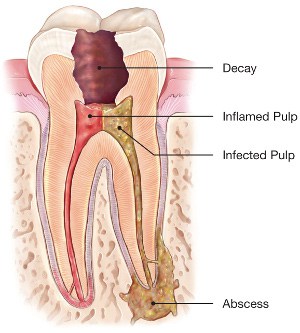
Inside your tooth, beneath the white enamel and a hard layer called dentin, is a soft tissue called pulp. This tissue contains blood vessels, nerves and connective tissue, which help grow the root of your tooth during its development. A fully developed tooth can survive without the pulp because the tooth continues to be nourished by the tissues surrounding it.
Our dentist or endodontist will examine the tooth and take a raidiograph.a A local anaesthetic is usually given to block pain. A sheet of latex, called rubber dam, is used to isolate the tooth and keep it clean and dry duringtreatment.
To reach the pulp, an opening through the tooth is made with a dental drill. Using special instruments called files, your dentist or endodontist will remove the inflamed or infected pulp.
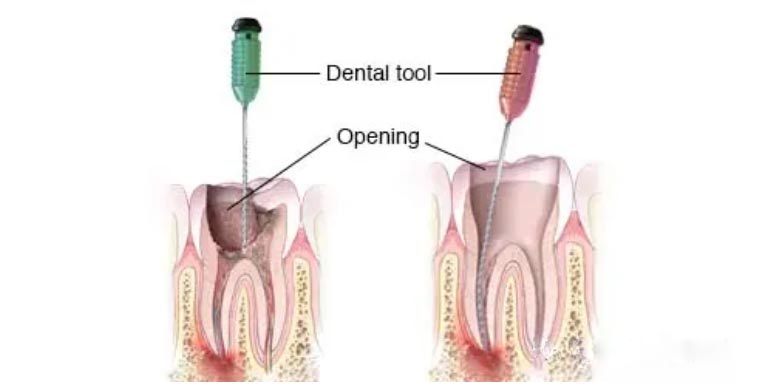
Each root canal is cleaned, enlarged and shaped. Anti-inflammatory and antibacterial medicines may be put inside the root canal to help stop the inflammation and infection. If a severe abscess has formed at the root rip, oral antibiotics may be needed to treat the infection.
you may need to make several vicits to the dentist or endodontist to complete the treatment. A temporary filling will protect the inside of the tooth between visits.
Pain or discomfort, if any, usually lasts no more than a few days, and will not be experienced by every patient.Some people may want to take a mild pain reliever such as ibuprofen or paracetamol.
Your dentist or may take several radiographs to check the shape and length of the root canals and the successed of treatment.
After the pulp has been removed, the tooth is not "dead". The tooth can survive without the pulp because it is nourished mostly by tissues around it.