

Teeth Whitening
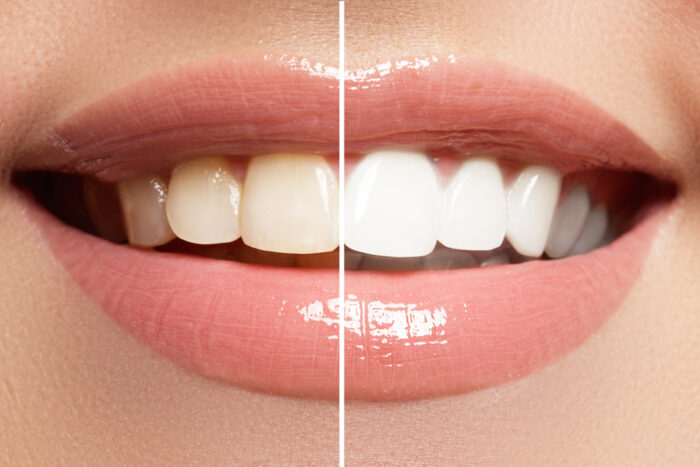
Teeth-whitening procedures fall into two main categories. Bleaching-based whitening uses oxidative chemical agents applied onto or into teeth to lighten intrinsic tooth colour via chemical reaction. Mask-type whitening covers the original tooth shade by bonding restorative materials on the tooth surface.
Common bleaching methods in clinic include cold-light whitening and laser whitening.
Note: Ultrasonic scaling removes calculus and extrinsic stains to restore the natural tooth colour; it is not a bleaching whitening treatment.
Causes of tooth discoloration
The colour we perceive from teeth comes not only from the outer enamel surface, but also from the underlying dentin showing through enamel. Primary teeth appear milky-white in childhood, while permanent teeth gradually turn yellow with ageing.
Tooth staining and yellowing are generally divided into extrinsic and intrinsic discoloration:
- Extrinsic discoloration: Various bacteria secrete sticky films on tooth surfaces. Tea stains, tobacco residues, minerals from drinking-water and saliva adhere to these films, forming plaque and calculus, which gradually darken teeth.
- Intrinsic discoloration: Stains form during tooth development. Tetracycline drugs deposited inside dentin cause yellow, brown or grey-toned teeth known as tetracycline-stained teeth. Excess fluoride in drinking-water may lead to dental fluorosis, presenting as chalk-white patches or brown stains. When the dental pulp dies, breakdown products of haemoglobin penetrate dentinal tubules and darken the tooth.