
Wisdom-Tooth Extraction
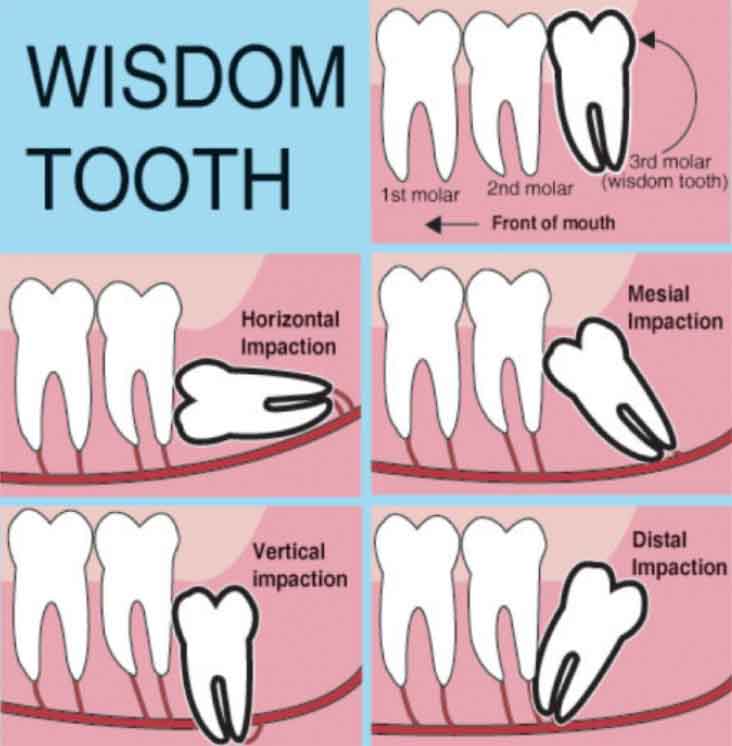
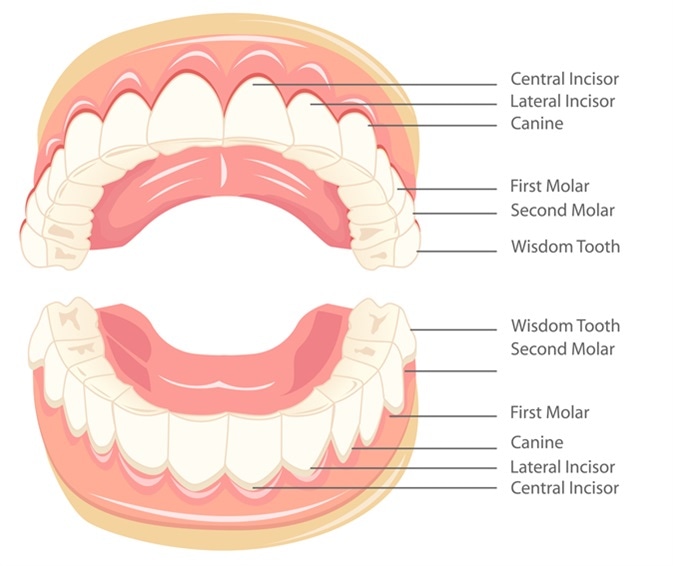
Wisdom teeth, medically known as third molars, usually erupt between the ages of 16 and 18. This period coincides with mental maturity, hence the common-name "wisdom tooth". Counting inward from the central incisors, wisdom teeth are the eighth teeth. There can be up to four wisdom teeth, one in each quadrant of the upper and lower jaw.
Eruption timing varies from person to person. Some individuals do not develop all four wisdom teeth, while others have no wisdom-tooth eruption at all. In certain cases, wisdom teeth remain completely buried under the gingiva and are classified as impacted teeth.
Common problems caused by wisdom teeth
Wisdom-tooth-related conditions include dental caries, pulpitis, pericoronitis, periodontal abscess, traumatic ulcers and malocclusion.
As third molars, wisdom-teeth can significantly affect the adjacent second molars. Most impacted wisdom teeth tilt forward at roughly 45 degrees against the second molar. This creates a gap where food debris easily accumulates and cannot be fully cleaned by regular brushing. Over time, both the second and third molars may develop caries or pulpitis, endangering the health of the second molar.
Located deep in the oral cavity, insufficient eruption space often leaves a gingival flap partially covering the wisdom tooth and forming a pericoronal pocket. Bacteria and food trapped inside frequently trigger pericoronitis, adjacent periodontal abscesses and even facial-space infections.
A wisdom tooth that erupts without an opposing tooth may over-erupt. Over-erupted maxillary wisdom teeth can repeatedly bite the cheek mucosa and lead to traumatic ulcers. Mesio-angular impacted wisdom teeth may push on anterior teeth and contribute to dental crowding.